SYNOPSIS

In April of 2026, Ruth Stage rocked the Jersey Shore Arts Center in Asbury Park with a haunting, radical reimagining of Night of January 16th by Ayn Rand. The production expanded its growing legacy of estate-backed productions following collaborations with the Edward Albee and Tennessee Williams Estates. 

Nearly a century after its debut, Rand’s courtroom drama was stripped of convention and reborn as a purgatorial trial where truth and lies dissolve into something far more dangerous. The case of Karen Andre, accused in the mysterious death of industrialist Bjorn Faulkner, unfolded as a relentless psychological interrogation, where witnesses were no longer innocent, lawyers became interrogators and every word carried the threat of exposure. The courtroom was no longer a place of justice - it was a pressure chamber.

At the center of this descent stood Ruth Stage’s creation of the Dark Triad, three archetypes of judgment presiding over the proceedings like something out of myth. Matt de Rogatis’s Judge Heath was not merely a man, but rather an ancient arbiter - half human, sleepless and burdened by the weight of endless verdicts. He ruled beside a blindfolded stenographer evoking the Lady of Justice and a clerk who operated with the quiet menace of an executioner. Reimagined by Matt de Rogatis and director Elizabeth Troxler and anchored by Haley Jones’s gripping Karen Andre, the production played to standing ovations and ignited audience talkback long after the final verdict. This immersive, volatile staging signaled something larger than a single run. Not a conclusion, but the start of a far more expansive evolution as Ruth Stage continues to develop the production for New York audiences.

FEATURED ARTICLES


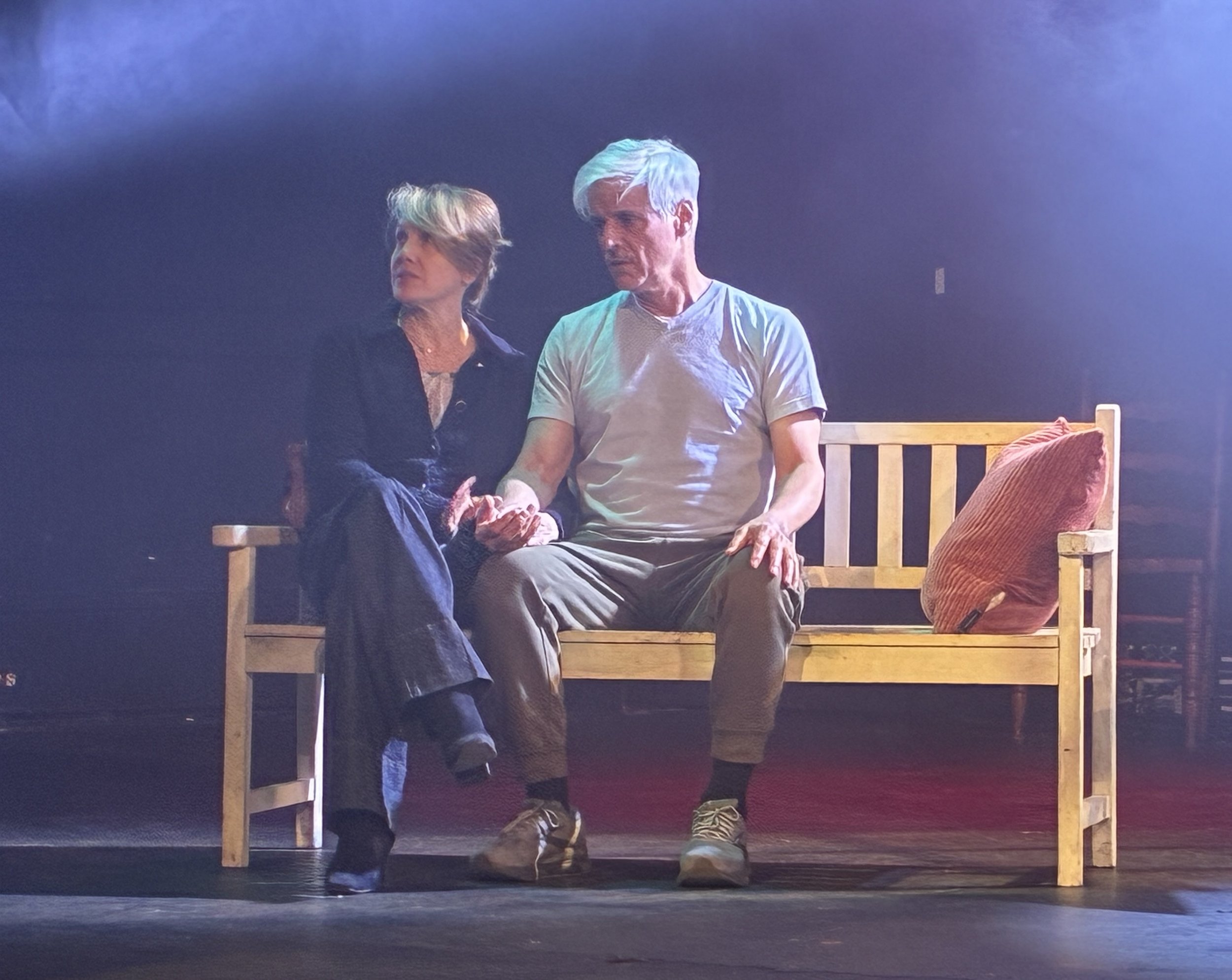
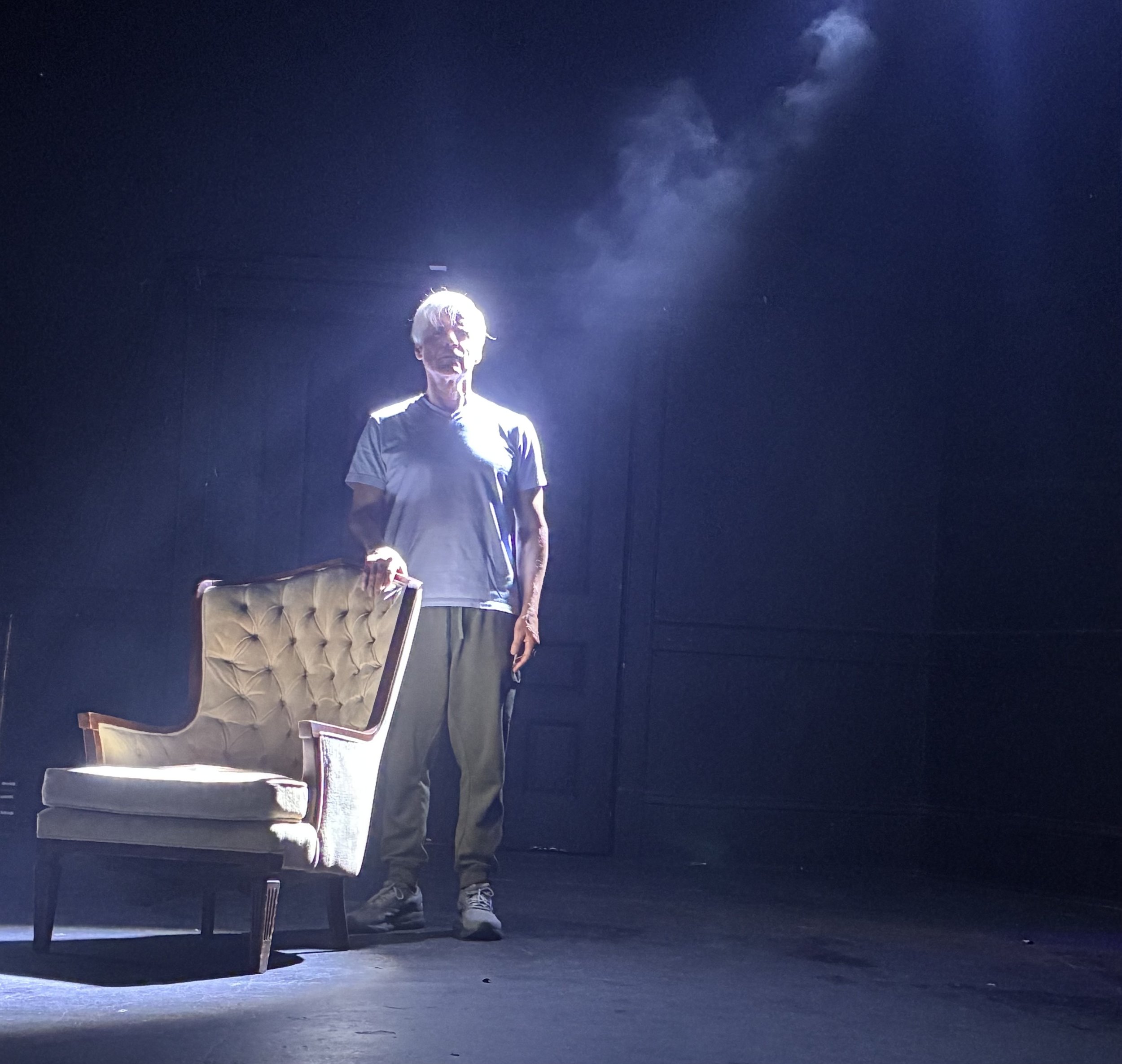
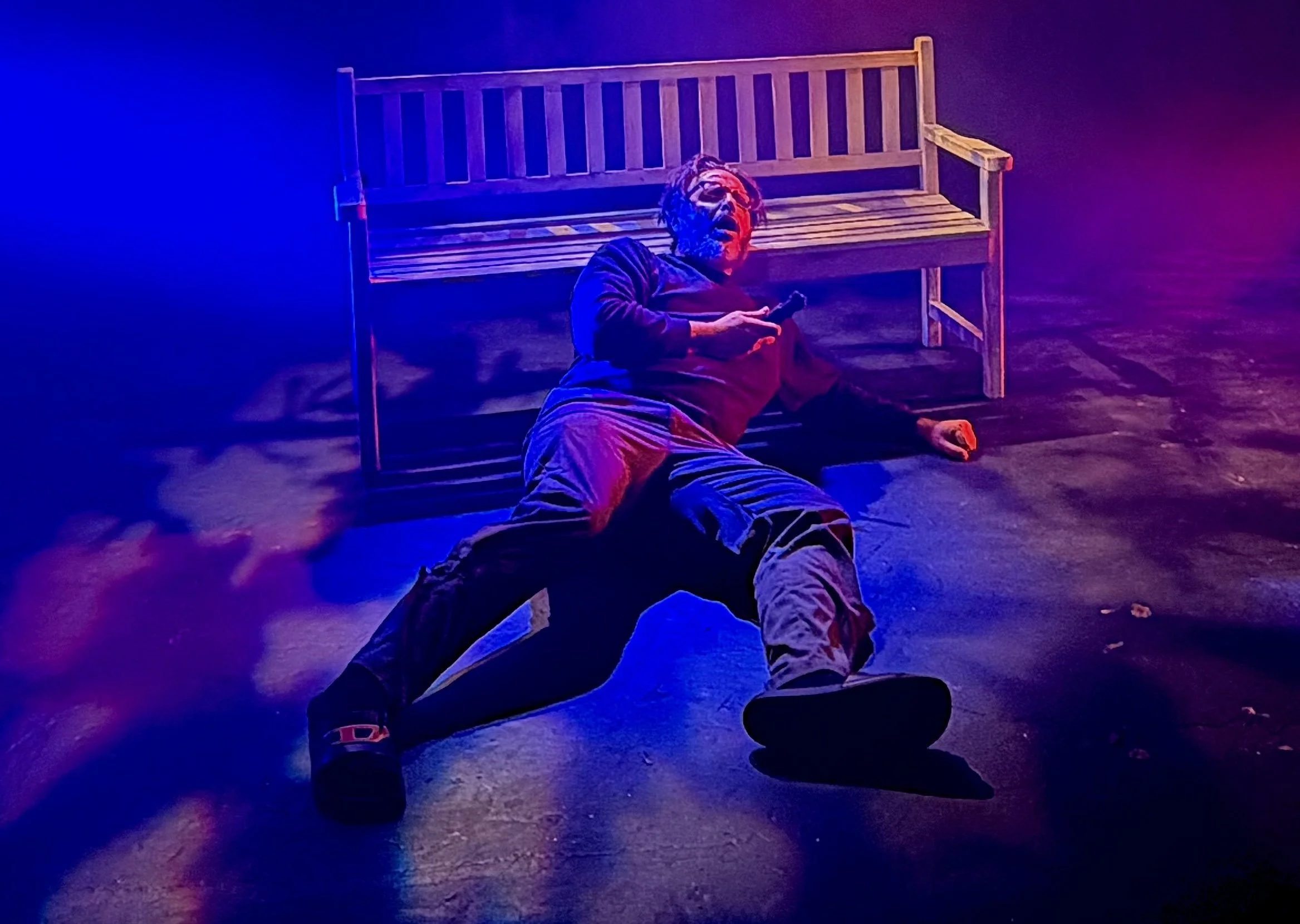
As a published Albee scholar and the co-founder of the Edward Albee Society, I try to see every New York production of an Albee play and many of the regional theatre productions in the Northeast. This past January I saw a production of At Home at the Zoo in Asbury Park, New Jersey, and it was terrific! It starred Emmy Award winner Christian Le Blanc (Michael Baldwin in The Young and the Restless) as Peter, Nancy Lemenager (Broadway production of McNeal with Robert Downey Jr. and several musicals) as Ann, and Matt de Rogatis (creative director of Ruth Stage–the producing company–best known for his portrayal of Brick in the Off-Broadway premiere of Cat on a Hot Tin Roof and producer of AHATZ) as Jerry. I liked this production of AHATZ much better than the NYC premiere with Bill Pullman! All three actors gave moving performances, with de Rogartis giving Jerry a unique interpretation based on his own acting approach informed by his academic study of psychology. Le Blanc’s performance of Peter in Homelife made me realize that Albee was right: the character in The Zoo Story is too much of a one-dimensional representative of conformist, classist 1950s America, a strawman too easily knocked down. By fleshing Peter out, as Le Blanc expertly did with Albee's text, I understood why Peter is so passive (until the end) in The Zoo Story. Lemenager also made me like her character and this couple so much more than I did watching the NYC production. And just a quick set design note: I loved how the “couch” in Act One becomes the bench in Act Two. Nice symbolism! As a result of this well-acted and well-directed (Theo Devaney) production, I now consider At Home at the Zoo a major Albee work.

~ LINCOLN KONKLE, CO-FOUNDER - THE EDWARD ALBEE SOCIETY

PRODUCTION GALLERY